A Life Worth Living
A Docuseries

LIVE on Tik Tok every Tuesday and Friday @ 10am pst

Proudly Fiscally Sponsored by

What if the most difficult season of your life became the very thing God uses to encourage someone else?
Every day, people are searching for hope.
They're scrolling through social media, watching videos, reading stories, and quietly wondering...
Will life ever get better?
Sometimes, all it takes is hearing one person's testimony to change their perspective.
Not because that person has all the answers.
But because they were willing to say...
"I survived."
"God carried me."
"There is hope on the other side."
Your story has the power to remind someone that they are not alone.
It may encourage a parent who feels overwhelmed.
A survivor who feels forgotten.
Someone struggling with depression who needs a reason to keep going.
A person questioning whether God still sees them.
You may never know how many lives your testimony touches but you can choose to make it available to those who need it most.
That's why we're creating this docuseries: to shine a light on real stories of people who have experienced trauma, discovered hope through their faith, and are willing to encourage others by sharing their journey.
If you feel God may be calling you to share your testimony, we would be honored to hear from you.
Together, we can create something that offers hope, healing, and encouragement to people who need it most.
Apply today to be considered for the docuseries.
Who's involved

THE VISION
Every year, women live through emotional abuse, psychological manipulation, domestic violence, trauma, isolation, and relationships that slowly change how they see themselves.
Many don't understand why they can't simply “leave.” Many have been told: “Why don't you just leave?” “Why do you keep going back?” “Why did you let this happen?”
But trauma is complicated. This series seeks to change the conversation.
A Life Worth Living will take audiences inside the experiences of women who have survived traumatic relationships and explore what happens to the mind, body, emotions, relationships, identity, and sense of self. We will also be interviewing therapists, mindset coaches, doctors, healers and more.
But this isn't a series about staying in the pain. It's about finding a way out.
Have you ever considered that your story could be the answer to someone's prayer?
Every day, people wake up carrying invisible pain. They wonder if anyone understands what they're going through. Some are battling trauma. Others are grieving. Many feel isolated, ashamed, or hopeless.
Sometimes, what helps the most isn't advice.
It's hearing someone say...
"I've been there too."
Your story doesn't have to be perfect.
It doesn't have to be polished.
It simply has to be honest.
When people hear how you found hope, healing, and strength through your faith, it reminds them they aren't alone.
Our upcoming docuseries is dedicated to sharing authentic stories of people who have survived trauma and discovered hope through their faith.
Could your story be one that inspires someone else to keep going?
If you feel called to share your journey, we'd love to hear from you.
Apply to participate in the docuseries today.
Help us get this started!

THE HOOK
What happens to someone when trauma changes the way they think, feel, trust, love, and sees themself? And what happens when they finally realize: “I am worth saving.”
Through survivor stories, mental-health professionals, advocates, therapists, faith leaders, and community organizations, the series explores the journey from:
Trauma → Survival → Awareness → Support → Healing → Purpose

WHY THIS STORY MATTERS
Trauma can affect a person's mental, physical, social, emotional, and spiritual well-being. A trauma-informed approach recognizes those effects and focuses on creating safer environments while avoiding retraumatization.
People experiencing abuse can also face barriers that make leaving complicated, including safety concerns, financial dependence, isolation, children, housing, and emotional trauma.
The National Domestic Violence Hotline emphasizes that survivors deserve options and personalized safety planning, whether they are experiencing abuse, preparing to leave, or have already left.
We want people watching this series to understand:
You are not crazy. You are not alone. You are not to blame for someone else's abuse. You have options. You can ask for help. And you are worth it.
We also want them to see SIGNS that some people don’t realize is abuse so that they may see something that is happening to them.

INSIDE THE BRAIN
One of the defining elements of the series will be helping audiences understand the science behind trauma. This is not a soft claim, it is one of the most well-documented areas in modern neuroscience. Psychological abuse leaves a measurable, physiological signature on the brain, and naming that signature is part of what frees a survivor from believing her reactions are a personal failing.
The Stress-Response System Under Siege
When a person is threatened, whether by a raised fist or a raised voice, a slammed door or a cold, calculated silence, the body activates the hypothalamic-pituitary-adrenal (HPA) axis. This system floods the body with cortisol and adrenaline, preparing it to fight, flee, or freeze. In a single traumatic event, this response is protective. In a relationship where the threat is constant, unpredictable, low-grade, ongoing, the HPA axis never fully powers down.
Research reviewed by trauma pioneer Dr. Bessel van der Kolk and colleagues shows that chronically elevated cortisol and glucocorticoid exposure is associated with measurable changes to the brain, including reduced hippocampal volume, the region responsible for memory and for distinguishing past danger from present safety. Survivors with post-traumatic stress have shown hippocampal volumes measurably smaller than non-traumatized peers, correlating with documented deficits in verbal memory and the ability to contextualize fear.
At the same time, the amygdala, the brain's threat-detection center becomes hyperactive and hyper-connected to other threat-processing regions. Studies on survivors of chronic maltreatment consistently show an overactive amygdala paired with an underactive prefrontal cortex, the seat of reasoning, planning, and impulse control. In practical terms: the alarm system stays on, and the part of the brain meant to reason through the danger goes quiet. This is why survivors often describe feeling like they “can't think straight” or “can't just leave” it is not weakness. It is biology.
Fear Overgeneralization and the Loss of Safety Cues
Research on chronic abuse shows that survivors often lose the ability to clearly distinguish between danger and safety, a phenomenon researchers call fear overgeneralization. A slammed cabinet, a change in tone, a delayed text message can all trigger the same full-body alarm as an actual threat. This is not “being dramatic.” It is a nervous system that has been trained, event by event, that unpredictability itself is dangerous.
The Freeze Response
Trauma researchers have also documented a phenomenon called tonic immobility, a temporary, involuntary state of motor and vocal shutdown triggered by overwhelming fear, sometimes described as a “dorsal vagal shutdown.” Hormone levels can remain elevated for days after a single traumatic incident. In an ongoing abusive relationship, this freeze response can become a survivor's most frequent coping mechanism explaining why some women appear passive, numb, or unable to react in the moment, even though internally they are in crisis.
Sources for this section include the peer-reviewed work of Dr. Bessel van der Kolk (Boston University School of Medicine) on the neurobiology of trauma and the HPA axis; published structural-MRI studies on hippocampal and amygdala volume in trauma survivors; and clinical research on tonic immobility and dorsal vagal shutdown in trauma response.

THE INVISIBLE PRISON
Sometimes the hardest prison to escape isn't a physical location. It's the belief: “I can't do this without them.”
The series explores how trauma… psychological, neurological, and financial, can create interlocking patterns of fear, isolation, dependency, shame, and loss of self-worth.
We will ask:
When did you stop believing in yourself?
Who told you that you weren't enough?
What did you lose trying to keep the relationship together?
Who were you before the trauma?
And eventually: “Who are you becoming now?”
THE TURNING POINT
Every survivor has a moment. It might be a conversation. A child asking a question. A friend who finally notices. A therapist saying something that changes everything. A moment alone in the bathroom. A night when she realizes: “I can't keep living like this.”
That moment becomes the beginning of the journey.
COMMUNITY CAN SAVE LIVES
One of the central messages of the series is: You don't have to do this alone.
Healing can involve many forms of support, including:
Trusted friends and family
Therapists
Mental-health professionals
Domestic-violence advocates
Support groups
Faith communities
Shelters and community organizations
Legal resources
Financial resources
Healthcare professionals
Survivor communities
The National Domestic Violence Hotline provides advocacy, crisis intervention, safety planning, and connections to local resources including shelters, legal help, counseling, financial assistance resources, and healthcare.
THERAPY & HEALING
The series will feature qualified professionals who can help viewers understand that healing isn't always linear.
We will explore what healing actually looks like: learning boundaries, learning to trust yourself again, processing trauma, building healthy relationships, finding community, reclaiming your identity, learning to regulate emotions, rediscovering your purpose, forgiving yourself — and realizing that surviving was not weakness.

THE EPISODIC FORMAT
EPISODE 1 THE WOMAN I USED TO BE
Who you were before the relationship? dreams. personality. hopes. identity.
EPISODE 2 WHEN LOVE BECAME CONTROL
Recognizing the signs of unhealthy and abusive relationships.
EPISODE 3 THE BRAIN UNDER TRAUMA
Experts explain what chronic stress and trauma do to the mind and body… the HPA axis, the amygdala, the hippocampus, and why the nervous system stays on high alert long after the danger has passed.
EPISODE 4 WHY CAN'T I JUST LEAVE?
Breaking down the complicated, evidence-based reasons survivors may remain in or return to abusive relationships, trauma bonding, the cycle of abuse, and the financial prison built to keep her dependent.
EPISODE 5 THE DAY EVERYTHING CHANGED
The turning point.
EPISODE 6 FINDING MY PEOPLE
Community, support systems, advocates, therapy, and learning how to ask for help.
EPISODE 7 REBUILDING ME
Identity, boundaries, confidence, independence, healing and for the mothers in the series, the conscious work of breaking generational patterns through CBT so their children inherit a different story.
EPISODE 8 YOU ARE WORTH IT
The transformation. The faith. The hope. The future. And the realization: “I am still here. And my story isn't over.”
A RESOURCE-DRIVEN SERIES
This project isn't designed simply to tell heartbreaking stories. Every episode can connect viewers with real resources.
The goal is for someone watching to be able to say: “I recognize myself in her story.” And then immediately discover: “There is somewhere I can turn.”
The National Domestic Violence Hotline offers personalized safety planning and emphasizes that survivors have options. The series can include carefully reviewed resource information at the end of episodes and on the project's website.
SAFETY FIRST
Because survivors may still be connected to abusive partners, safety will be built into the production process.
The project will prioritize:
Informed consent
Confidentiality where necessary
Survivor control over participation
Trauma-informed interviewing
Professional support
Safety planning
Secure communication
Careful handling of identifying information
Post-interview support and resources
Digital safety is particularly important because abusive partners may monitor phones, computers, accounts, or online activity. The National Domestic Violence Hotline specifically provides technology-safety guidance for survivors.
THE INFINITE LOVE FILMS DIFFERENCE
Infinite Love Films believes in the power of storytelling to create connection, healing, and hope.
We don't want to exploit trauma. We want to transform the conversation around it.
This series gives survivors a voice while bringing together experts, advocates, community organizations, and faith-based perspectives.
Our goal is to create something that is: HONEST. EDUCATIONAL. HOPEFUL. RESOURCE-DRIVEN. FAITH-CENTERED. HUMAN.
TARGET AUDIENCE
Primary Audience
Women and men who have experienced:
Abusive relationships
Trauma
Emotional manipulation
Domestic violence
Narcissistic abuse
Relationship trauma
Loss of identity
Attemped Suicide or had thoughts of suicide due to the abuse
Secondary Audience
Families
Friends
Therapists
Advocates
Faith communities
Healthcare professionals
Social-service organizations
People who want to understand and support survivors
Anyone who loves someone experiencing abuse
SOCIAL IMPACT
This series can become more than a television program. It can become a movement.
Potential extensions include:
Survivor support resources
Community screenings
Church screenings
College and university screenings
Mental-health discussions
Survivor panels
Educational workshops
Podcast conversations
Social-media campaigns
Resource partnerships
Nonprofit partnerships
Faith-community partnerships
A companion resource website
THE CALL TO ACTION
Every episode should leave viewers with a next step.
If you're experiencing abuse: You are not alone.
If you're worried about someone: You can learn how to support them.
If you've survived: Your story isn't over.
If you are struggling: There are people who want to help.
And if it is safe to do so, viewers can connect with qualified advocates and local resources.
THE MESSAGE
We want victims watching this series to hear something they may have not heard in a very long time:
You are worth it.
You are worth protecting. You are worth loving. You are worth healing. You are worth fighting for. You are more than what happened to you.
And if faith is part of your life: You are a child of God.
Your story matters. Your life matters. And there can be a way forward.
THE BIGGER VISION
We aren't just making a docuseries. We're creating a platform where people can say: “This happened to me.”
And another someone can answer: “You're not alone.”
And together, they can discover: “There is a way out.”
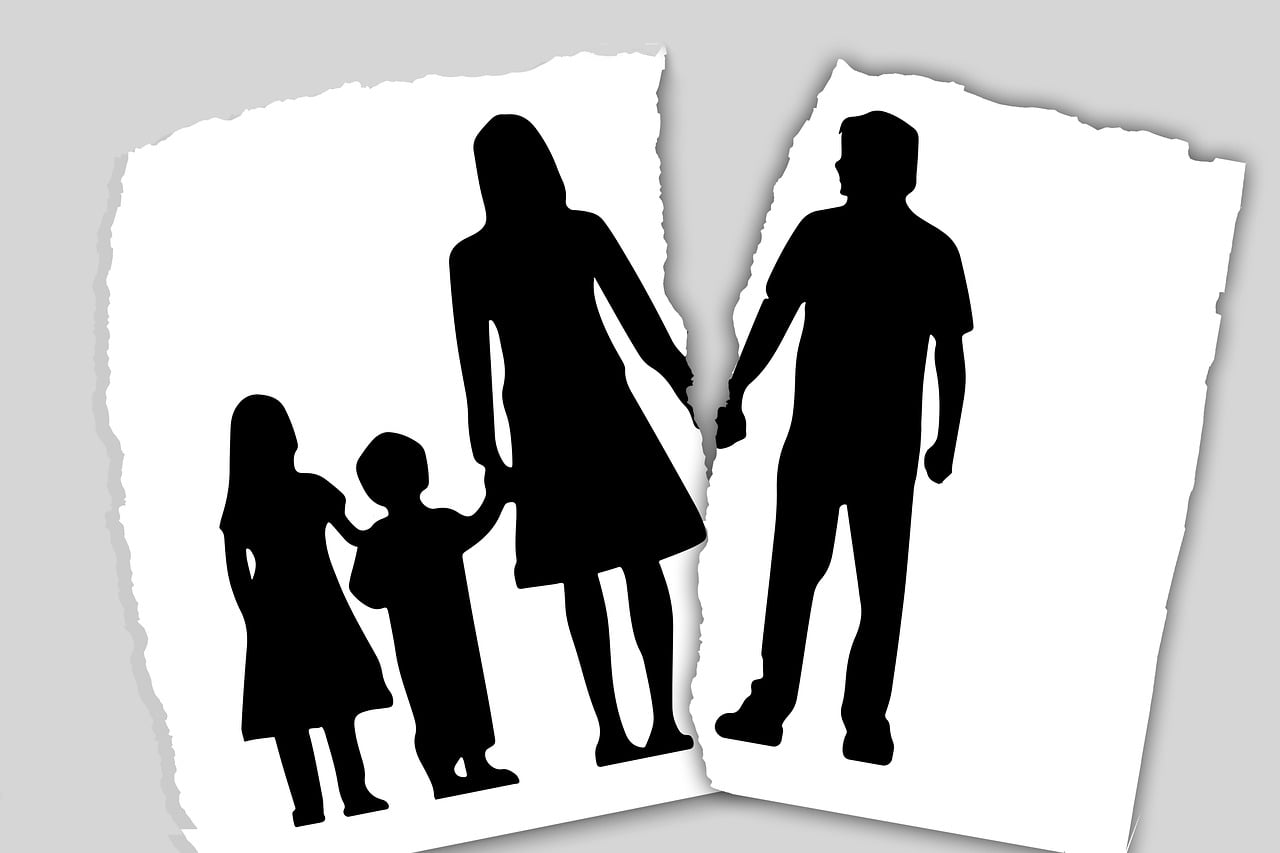
THE PEOPLE
At the heart of the series are people who have survived from different backgrounds. Different ages. Different circumstances. Different stories.
Some may have experienced:
Emotional abuse
Psychological manipulation
Gaslighting
Narcissistic abuse
Domestic violence
Financial control
Isolation
Sexual abuse
Childhood trauma
Trauma carried from one relationship into another
The loss of identity
The struggle to rebuild after leaving
We won't define these people by what happened to them. We will show who they became.
THE SCIENCE OF WHY SHE CAN'T “JUST LEAVE”
This is the question survivors hear more than any other and the one that carries the most judgment. The research tells a very different story than the assumption behind the question.
Trauma Bonding and Intermittent Reinforcement
Psychologists describe the emotional attachment that forms in abusive relationships as trauma bonding, a bond created through cycles of cruelty followed by affection. This pattern follows what behavioral science calls intermittent reinforcement: reward that arrives unpredictably is more powerfully addictive than reward that arrives on a reliable schedule. The unpredictability itself is what deepens the attachment.
This maps directly onto what researcher Dr. Lenore Walker first identified as the Cycle of Abuse: rising tension, an incident of abuse, a period of reconciliation and apology often called the “honeymoon phase,” and a period of calm, before tension begins building again. During the honeymoon phase, survivors describe genuine relief, hope, and even joy. That emotional high, following the low of the abusive episode, is believed to trigger a dopamine response similar to patterns seen in behavioral addiction which is part of why clinicians describe the pull back toward an abuser as something closer to withdrawal than a simple choice.
Why the Brain Chooses Attachment Over Escape
Under chronic threat, the amygdala's heightened activity and the prefrontal cortex's reduced activity described in the previous section directly impair a survivor's ability to plan and execute a complex, high-risk exit, while simultaneously deepening the biological pull toward the one source of both fear and comfort. In situations of prolonged threat, humans instinctively bond with the person who holds power over them; it is a survival response, not a character flaw.
The Data Behind “Why Doesn't She Leave?”
Survivors who ultimately leave permanently report returning to an abusive partner an average of several times before the relationship ends for good, a pattern consistent across multiple studies of domestic violence survivors.
Leaving is statistically the most dangerous point in an abusive relationship; research on intimate partner homicide has repeatedly found that the period during and immediately after separation carries the highest risk of escalation and lethal violence.
Studies of survivors identify overlapping, compounding barriers to leaving financial dependence, fear of retaliation, concern for children, housing insecurity, immigration status, social and religious pressure to preserve the marriage or family, and a diminished sense of self-worth built through sustained emotional erosion.
In one university-based survivor study, roughly half of participants cited financial reasons as the primary reason they stayed, while nearly a quarter identified generational trauma, having grown up around similar dynamics as a compounding factor.
The series will treat this not as a rhetorical talking point but as a central, evidence-based storyline: leaving an abuser is not a single decision. It is a process the brain and body must be supported through ideally with trauma-informed professionals, safety planning, and community not judged for taking time.
THE FINANCIAL PRISON
Of every tactic an abuser uses, financial control is among the most invisible and among the most effective. Research from the National Network to End Domestic Violence (NNEDV) has found that financial abuse is present in an estimated 99 percent of domestic violence cases. It is not a side effect of abuse. For most abusers, it is a deliberate strategy.
How Financial Abuse Is Built, Piece by Piece
Financial abuse rarely arrives all at once. Advocates and researchers describe a slow, progressive pattern designed to make a woman's own competence feel like a myth she has to be reminded of:
Controlling access to money, bank accounts, and credit sometimes allowing no access at all
Preventing a partner from working, or actively sabotaging her employment through harassment at her workplace, forced absences, or manufactured emergencies
Running up debt in her name, damaging or stealing her credit, or committing identity theft
Withholding basic necessities or requiring her to justify every purchase
Causing evictions or housing instability as a control mechanism
The Allstate Foundation and NNEDV, who have partnered on economic-empowerment research and programming for survivors since 2005, report that concerns about the ability to provide for themselves and their children are consistently cited by survivors as among the top reasons they stayed with, or returned to, an abusive partner.
The Cruel Irony: Reinforcing “You Can't Survive Without Me”
This is where financial abuse becomes psychological abuse. An abuser who controls the money supply also controls the narrative: he tells her, directly or through engineered circumstance, that she is incapable of supporting herself. Every manufactured financial crisis becomes “proof.” Every sabotaged job becomes evidence. Over time, many survivors internalize this message so completely that leaving does not feel like stepping into freedom it feels like stepping into guaranteed failure.
Research on domestic violence and poverty shows this is a documented feedback loop: limited financial resources are themselves a risk factor for abuse, because fewer resources mean fewer real options for safety, which in turn allows an abuser to exert more control. And leaving does not automatically mean safety for many survivors without savings, credit, or independent income, leaving can mean stepping directly into poverty, which is its own form of danger, especially with children involved.
Why This Belongs in the Series
This series will not romanticize the moment a woman walks out the door. It will show what walking out the door actually requires: financial literacy resources, credit-building support, emergency assistance programs, legal advocacy, and community organizations built specifically to help survivors move as NNEDV's own survivor curriculum frames it from short-term safety to long-term security.
Sources for this section include the National Network to End Domestic Violence (NNEDV) Economic Justice Project, The Allstate Foundation's Moving Ahead financial-empowerment research and curriculum, and published research on the relationship between domestic violence, financial dependence, and poverty.
Surviving was strength.
BREAKING THE CYCLE: HEALING GENERATIONAL TRAUMA THROUGH CBT
This series will center one of the most important and most hopeful findings in trauma research: the cycle can be broken, and it is most often broken by a person who does the work.
How Trauma Passes Down
Researchers describe two related patterns: intergenerational trauma, where a parent's unresolved experiences shape how they raise their children, and transgenerational trauma, where the impact ripples outward across multiple generations. Adults with unresolved adverse childhood experiences (ACEs) are, on average, at measurably higher risk of repeating harmful relational patterns with their own children not because they intend to, but because the nervous system tends to model what it learned as normal, long before conscious parenting philosophy ever enters the picture.
Peer-reviewed studies confirm this transmission is measurable: a parent's history of adverse childhood experiences is statistically associated with increased mental-health difficulties and increased externalizing behavior in their own children. But researchers are equally clear about the other half of the finding this transmission is not inevitable.
What the Research Shows About Breaking the Pattern
A 2025 systematic review of trauma-informed parenting interventions examining randomized and quasi-experimental studies of caregivers with documented histories of childhood trauma found compelling evidence that trauma-informed, attachment-based parenting interventions can measurably improve caregiver well-being, promote safer and more nurturing parenting practices, and protect the next generation from repeating the harm. The most effective interventions were the ones grounded in structured therapeutic frameworks, delivered with cultural sensitivity, and supported by community.
Cognitive Behavioral Therapy is one of the most well-evidenced tools for this work because it targets the exact mechanism researchers point to as the transmission point: the automatic thought, the inherited belief, the trained response. CBT gives a survivor a structured way to identify a cognitive distortion inherited from her own upbringing or her abusive relationship “I am only safe if I stay small,” “conflict means danger,” “my needs don't matter” name it, challenge it, and consciously choose a different response before it becomes her child's inheritance too.
Becoming the Interruption
Clinicians describe this work as raising a child while simultaneously re-parenting yourself responding differently to your own child in the exact moments your nervous system is pulling hardest toward the pattern you grew up inside. It is, by every account, some of the hardest emotional work a person can do. It is also, according to the research, one of the most powerful protective factors a child can have: a parent-child relationship strong enough to interrupt the pattern, rather than transmit it.
This is the deeper transformation the series wants to document: a woman doesn't just leave a relationship that hurt her. With the right support and therapy, CBT, community, safety, and time…she becomes proof to her own children that the pattern stops here. Not because she never struggled. Because she did the work in front of them.
Sources for this section include the 2025 systematic review “Breaking the cycle: A systematic review of intergenerational transmission of child maltreatment and preventive parenting interventions” and related peer-reviewed research on ACEs, attachment-based parenting interventions, and CBT as a mechanism for interrupting inherited cognitive and behavioral patterns.
FAITH & THE SPIRITUAL JOURNEY
Faith will be an important part of the series… but not as a replacement for professional care.
For women who believe in God, faith can be an important source of hope, identity, community, and strength. The series will explore the belief that: “You are a child of God.”
You have value. You have purpose. You are loved. Your life matters. Your story matters. And what someone did to you does not determine your worth.
We will also create space for women who are at different places in their faith journey.
The message is hope, not judgment.
FROM SURVIVOR TO THRIVER
The final chapters of each woman's story aren't about pretending the trauma never happened. They're about learning: “This happened to me. But it does not get to define me.”
We will follow women as they rebuild:
Their confidence
Their careers
Their families
Their friendships
Their faith
Their identity
Their dreams
Their sense of purpose
And ultimately: Their future.
THE EXPERTS
Each episode can feature professionals and advocates including:
Mental-Health Professionals
Psychologists, therapists, counselors, trauma specialists
Medical Professionals
Experts who can explain the physical and neurological effects of chronic stress and trauma
Domestic-Violence Advocates
Professionals who understand safety planning and survivor services
Legal Professionals
Experts who can explain available legal resources
Financial Professionals
Experts who can discuss financial independence and rebuilding
Faith Leaders
Pastors and spiritual leaders who understand trauma-informed ministry
Survivors
Women and men who can say: “I've been there. And there is a way forward.”
A Life Worth Living A Docuseries on Domestic Violence in America
The survivors have a story. The criminals have a record. The system has failed them both. This docuseries changes that.
"They were told to stay silent. They were told no one would believe them. We are here to make sure the world does. This is not just a documentary. This is a reckoning."
What is
A Life Worth Living?
A Life Worth Living is a multi-episode docuseries that goes where the cameras have never been allowed to go — into the lives of domestic violence survivors as they reclaim their stories, their identities, and their futures.
This is not a single story. This is America's story. We follow real survivors across the country — women, men, children, and families — who escaped their abusers and are demanding justice. We sit with law enforcement officers who fought to prosecute. We speak with advocates who sheltered the broken. And we expose the systems that failed them.
This docuseries does not look away. It gives survivors a platform, holds perpetrators accountable, and builds a cultural moment that forces a national conversation — one that has been delayed for far too long.
Worth
Living
Six chapters.
One unbreakable truth.
This series will do
three things.
The case for
investing now.
This docuseries is a cultural and commercial opportunity. Here is what you need to know.

Melissa Lavigne
Melissa Lavigne is a producer, filmmaker, manager, and advocate whose work sits at the intersection of storytelling and social change. As founder of Infinite Love Films, she has spent her career building platforms for voices that have been systematically silenced.
A Life Worth Living is the most personal and urgent project of her career. She brings to this series not only professional credibility — as a verified IMDb filmmaker with experience in narrative and documentary formats — but a deep, unshakeable conviction that survivors deserve more than sympathy. They deserve an audience.
Melissa is joined by a team of experienced documentary filmmakers, survivor advocates, legal experts, and social media strategists to ensure this series not only gets made — it gets seen by millions.
The conversation
is already happening.
This is the documentary
the world is waiting for.
Social justice documentaries are among the highest-performing content categories on streaming platforms today. Surviving R. Kelly. The Vow. Escaping Twin Flames. These series became cultural events — not just programming.
A Life Worth Living is positioned to do the same. The topic is urgent. The audience is enormous. The timing is now.
Your donation
funds their voice.
You don't have to be a major investor to make this happen. Every dollar funds a camera in a room where truth needs to be told. Every donation is a message to survivors everywhere: we believe you.
Or text Melissa directly to discuss your contribution and how you want to be involved.